


Food flavours and flavorings are everywhere, and have been around probably longer than you think. We bring you an interesting article with the origins and protagonists of the explosive growth of the flavor industry.
11TH CENTURY: THE ORIGIN, THE ESSENTIAL OILS
Long before the first food flavorings were synthesized, the Egyptians were the first to extract plant flavors in the form of essential oils.
The Persian philosopher and physician Avicenna discovered that oils can be distilled, extracting the oil and condensing the vapor back into liquid. Giving rise to many essential oils and, for centuries, that industry has been the flavor industry and the flavour industry
1850’S: THE FOOD SCENT OF FRUITS COMES INTO ACTION
The first historical record in terms of food flavours is given in 1851, at the Universal Exhibition of the extinct Crystal Palace in London. In the chemistry section, visitors could stop at stalls and try pear, apple, grape or pineapple candies. They were flavored for the first time not with natural agricultural products, but with compounds synthesized in chemical laboratories.

Exhibition at the Crystal Palace in London in 1851
The 19th century saw the growths of organic chemistry and the chemical industry, industrialization provided ample material for new experiments. The boom in food flavours was beginning. Some of these chemicals were very flavourtic.
August Hofmann, distinguished chemist, discussed the chemicals behind these imitations of flavors in his report to the exhibition. “The striking similarity of the odor of these ethers to that of fruit had not escaped the observation of chemistry,” he wrote.
“Who hadn’t noticed the apple smell that filled the lab when working with amyl valerianate?” However, he said, it was “reserved for practical men” who would see the commercial possibilities of these resemblances.
In most cases, these first artificial fruit flavors appear to have involved simple chemicals or simple combinations of esters, diluted in alcohol. As new flavourtic chemicals were synthesized and combined, an ever-expanding list of artificial fruit flavors was produced. “Essences are made from almost all fruits, some are perfect in their resemblance to real fruit and others leave a lot to the imagination.”
1860’S: EXTRACTING VANILLIN FROM VANILLA
Nicholas-Theodore Gobley isolates vanillin, the organic compound responsible for the flavor of vanilla, of vanilla beans. It is the first time that someone has managed to extract a flavor compound from the ingredient itself, a major development in the science of flavor. Thus begins the first and greatest blow of synthetic flavors: turning vanilla from a coveted luxury good into everyday. For two hundred years after its introduction to the West, vanilla was a precious commodity. Artificial pollination helped increase the world’s supply by allowing the plant to grow outside of its native Mexico.
The real change came when they discovered the molecular structure of vanillin and got the flavor of synthetic vanilla.

1878, Wilhelm Haarmann in his laboratory with Karl Reimer
In 1874, the German scientists Ferdinand Tiemann and Wilhelm Haarmann synthesized vanillin from the bark of a pine tree. When they opened the world’s first vanillin factory in 1875, what was an exotic ingredient became a common and accessible flavor.
1893: THE FIRST EXISTING FLAVOURTIC PRODUCT
Wrigley chewing gum with its distinctive but at the same time unspecific “fruit flavor” hits the market and is labeled with the slogan “Chewing gum with the fascinating artificial flavor.” It was very popular and can be considered as the first successful brand to use food flavorings.
In the late 19th century, artificial fruit essences, food flavorings, and other synthetic flavors were widely used in the United States, Germany, France, and Great Britain, accompanying the increasing consumption of sugar. Children could buy penny candy and gum whose strawberry flavor came from various synthetic esters.

Young men and women, exhausted by the new fad of biking, could stop at a drugstore for a fizzy soda that owed its fruity appeal to chemicals mixed by the store pharmacist. You could buy jams made cheaply from soft apples and then modified with food flavorings to resemble peach, quince, or blackberry.
How did these knockoff products taste? A soda vendor told an inspector investigating the use of imitation flavors in the 1870s that “customers cannot distinguish artificial flavors from true fruit flavors.” A New York extract manufacturer went further, insisting to the inspector that imitation fruit syrups when “made right” are “often preferred by customers to pure fruit,” in part because they could be offered in so many more flavors.
1906: FOOD FLAVOUR LAWS APPEAR
President Roosevelt signs the Pure Food and Drug Act, making the production, sale, or transportation of poisonous or mislabeled food or drugs a law. Now all “copycat” flavors in food must be labeled, and as studies reveal more about the dangerous side of certain chemicals, public concern about copycat flavors grows.
With few exceptions, little was known about flavoring chemicals in foods before the late 1930s. There are several reasons for this. Dozens or even hundreds of chemicals, called aromists, contribute to what we perceive as the taste and flavour of a food.
(Photo Law pure food)

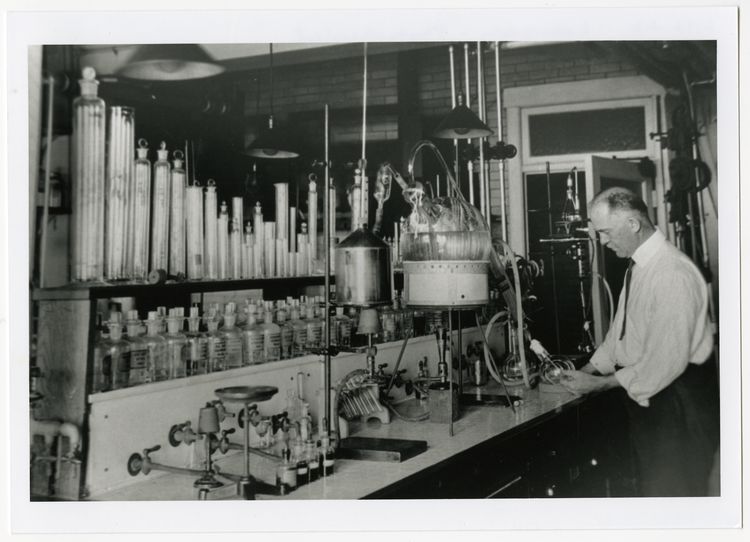
They are typically present in extremely small amounts, parts per million or even less, which comprise a tiny portion of the complex chemical mix of proteins, fats, sugars, fiber, and other materials in foods. Flavor chemicals also tend to be volatile and reactive. Before the 1950s, isolating and identifying flavor chemicals in food required meticulous and careful work and a lot of equipment.
1914-1918: THE FOOD FLAVOR INDUSTRY GROWS
In the First World War the food flavor industry was affected because most of the market came from Germany. As a result, American companies that used to import these chemicals are forced to start developing their own flavors.
In 1920, government chemists from the United States Department of Agriculture (USDA) tried to determine the components responsible for the flavour of apples, they used almost a ton of apples, from which they derived less than two grams of volatile flavourtic materials, which allowed them to identify five chemicals.
The results on apple flavor chemistry were released, allowing flavor companies to use it as a base for their flavours. The interwar decades were a period of rapid growth for the food flavor, flavor and fragrance industry around the world.

Vacuum Distillation in USDA Flavor Study
As more and more food was produced in factories, the demand for food flavorings intensified. The safe and large-scale production of processed foods involved high temperatures and other conditions that changed the way food looked, tasted or smelled and rarely for personal benefit so that food flavorings could restore palatability that had been eliminated in the process. prosecution.
The market also brought with it new requirements for standardization, consistency and stability: cookies that would taste the same whether they were bought in Murcia or Galicia, in May or September; canned meat that could offer the same flavor at an equally low price despite an increase in the cost of pepper; soft drinks whose taste would remain permanent and familiar despite the time on the shelf.
Food flavor companies offered the specialized expertise and experienced staff to solve palatability issues and develop unique flavors.
1940’S: NEW TECHNOLOGIES FOR FLAVOURS
The demand for military rations during World War II channeled public money towards the development of new technologies for stable food processing. Flavor additives, including MSG, become one of the best ways to make this processed food taste better. At the same time, the shortage of many foods and spices is pushing the flavor industry to develop artificial substitutes for common ingredients like black pepper and cinnamon.
Much of the research conducted by flavor companies remained proprietary, and the chemicals used in specialty food flavor formulations were often closely guarded secrets.

James Broderick commented that when he began his career as a flavor chemist in the 1930s, the peach flavor made by Fries & Fries was the goal that he and other chemists tried, and failed, to duplicate.
He later learned that the essential component was produced by accident in the castor oil processing that the manufactures produce a powerful peach scent. Another secret component of the peach flavor was derived from an alcohol-soaked wedge of cheese, which was left to ripen near an oven.
1950’S: THE GOLDEN AGE
Consumers in the 1950s seemed to be faced with an unprecedented array of options; snacks, sweets and prepared meals in a fascinating range of varieties.
Manufacturers had always competed on price and invested heavily in advertising, but now taste is important to customers. In a 1947 article the General Mills Vice President of Research emphasized the importance of developing flavors that were attractive, distinctive, unique, and memorable. Ideally, he wrote, a flavor will serve “as an incorporated trademark that will invariably be identified by its brand name and its producer.”
The “golden age of processed foods” was also a golden age of chemical additives. In a 1953 pamphlet from the Association of Manufacturing Chemicals celebrating the “continuing progress of the chemical industry in meeting basic human needs,” it highlighted the role of chemicals in producing not just more food, but food. that tasted better, were more nutritious, and cost less.

“Nothing sells like flavor”, was a 1950s catchphrase for Fritzsche Brothers, a leading flavor and fragrance company. One competitor, Dodge & Olcott, called the flavor “the silent salesman.” “Flavor comes out with your customer, goes to the table and is your personal ‘door-to-door’ salesperson. The final impression that this seller creates decides the final destination of his product ”.
Flavor companies promised synthetic flavors that were convincingly naturalistic, but lasted “through months and months of shelf life.” During this stage the first flavored fries are invented by the Irish company Tayto. There are two flavors to start with: cheese and onion, and vinaigrette. Soon after, flavored potato chips appear in the United States, with flavors of barbecue, sour cream, and onion.
“Almost all foods, produced with the help of chemicals,” the brochure instructed, “are improved for consumers by food technologists who use chemicals to make them cleaner, tastier, or more nutritious than the diet of a generation ago. ”.
1955: THE CHROMATOGRAPH, A VARIETY OF FOOD FLAVORS
The food flavoring industry would change radically in 1955, with the debut of a powerful new analytical instrument: the Perkin-Elmer Vapor Refractometer.
This was the first commercially successful gas chromatograph (GC). A small sample of a complex mixture, such as strawberry juice, put into the machine would vaporize and flash as it passed through thin lined glass columns, carried by a neutral gas.

As it travels through the machine, the complex mixture resolves into volatile components depending on the boiling point differences. As the fractionated gas exited the GC, it triggered a detector, which produced a graph whose peaks and valleys indicated components of different boiling points. With the GC the task of isolating and identifying the complex components that contribute to the flavor of a food became substantially less daunting. In the two decades after GC’s debut, thousands of new volatile flavor chemicals were isolated and identified.
1960-70’S: MORE REGULATION OF FOOD FLAVORS
An amendment to the Food, Drug and Cosmetic Act that requires manufacturers to prove that their food additives are safe, establishes a list of chemicals that are “generally considered safe.”
The list facilitates 700 additives, all pre-approved for use, to become standard ingredients in the manufacturers’ repertoire. Despite growing regulation and the growing shift towards organic and healthy foods in the 1960s and ’70s, flavor additives continued to play an important role in the creation of food. Here theFDA listupdated today.
Cold War fears was just one recent example of old anxieties about the food supply. If one day we had to live on foods made from algae, yeasts, soybeans and petrochemical derivatives, food flavorings would add flavor and play a crucial role in making these foods more palatable or even delicious.
On a more mundane note, as an increasing number of citizens tried to take more care of themselves and took a look at their body, blood pressure, blood sugar and cholesterol levels, it took food flavorings, and expert aromists, to make this new category of “diet food” was less sacrificed.

Millions of people today live on low-calorie or salt-free and sugar-free diets. Whether for health or aesthetic reasons, this group is constantly growing and with it the market for diet and low-calorie foods.
Provide attractive taste to foods lacking in sugar or saltit is complex, and taste differences to some degree are unavoidable. However, the aromist or flavor chemist can, through diligent investigation, provide an acceptable taste for such foods thanks to the food flavorings.
1980: FOOD SCENT BECOMES COMPLEX
Political turmoil in Madagascar, where most of the vanilla is grown, is causing vanilla prices to skyrocket. McCormick, a vanilla producer, in need of an alternative to keep up with demand, begins to develop a faux vanilla flavor that is more complex than basic vanillin.
Using gas chromatography and mass spectrometry they were able to identify components of the vanilla and use them to prepare their own nearly identical mixture. In 1982 McCormick’s “Imitation Vanilla” hit the market.

2000: THE TREND TOWARDS NATURAL FOOD FLAVOUR
In the 21st century, our food cravings have only increased. We want food that is “good” – good for us, good for the environment, convenient, affordable, tasty, but also virtuous, real and pure. We seek what we call natural.
Since the 1970s, the FDA has defined a natural flavor as “the essential oil, oleoresin, essence or extract, protein hydrolyzate, distillate, or any roasting, heating, or enzymolysis product, which contains the flavor components derived from a spice. , fruit or fruit juice, vegetable or vegetable juice, edible yeast, grass, bark, shoot, root, leaf or similar plant material, meat, seafood, poultry, eggs, dairy products or fermentation products thereof ”. Artificial flavors are derived from anything that is not on that list.
In the FDA definition, the difference between natural and artificial depends largely on the raw material you start with. But in the end it is chemistry and the work of aromists from companies like IGH Flavors & Technology that produce flavours.liquids, indust, “Natural” and “artificial” for the sector.

In fact, the same synthetic chemical additive can be produced as an “artificial” or “natural” flavor. But the second is being sold as a prize because of consumer desires for that comforting word.
Drawing a bright and clear line between “natural” and “artificial” has never been easy, because it has always been more of a cultural distinction than a real one. As we demand more and more of our food, it is important to remember that food can also be chemical, that flavors have long depended on science and technology, and that the complex problem of improving the health of our bodies and our planet will require more than simple solutions.
2010’S-20: THE FUTURE OF FOOD FLAVOURS
Scientists devise a type of yeast that produces vanillin as a by-product when it feeds on sugar. Because it is not a chemical derivative, this vanillin can be labeled “natural,” an important selling point in a culture where artificial ingredients are under suspicion.
Manipulating yeast to produce flavor is fast becoming big business, and biotech startups are attracting big investment. Science is advancing at an exponential rate and who knows? In a couple of decades we may have “natural” sugar with no calories in our pantry.